Home/Training
Skills that matter when it counts
Every Wallingford CERT member completes FEMA’s CERT Basic Training, then keeps building skills through drills, exercises and additional courses.
Class schedule
Winter 2027
- Dec 2Information NightWednesday, 7:00 to 8:30 PM · meet the team and ask questions
- Jan 6CPR, First Aid and BLSRequired, free · Wednesday, 6:30 to 9:30 PM · date to be confirmed
- Jan 20Stop the BleedRequired, free · Wednesday, 6:30 to 9:00 PM · date to be confirmed
- Feb 3Introduction and disaster preparednessWednesday, 6:30 to 8:30 PM
- Feb 10CERT organization and radio operationWednesday, 6:30 to 8:30 PM
- Feb 17Disaster psychologyWednesday, 6:30 to 8:30 PM
- Feb 24Terrorism and electrical safetyWednesday, 6:30 to 8:30 PM
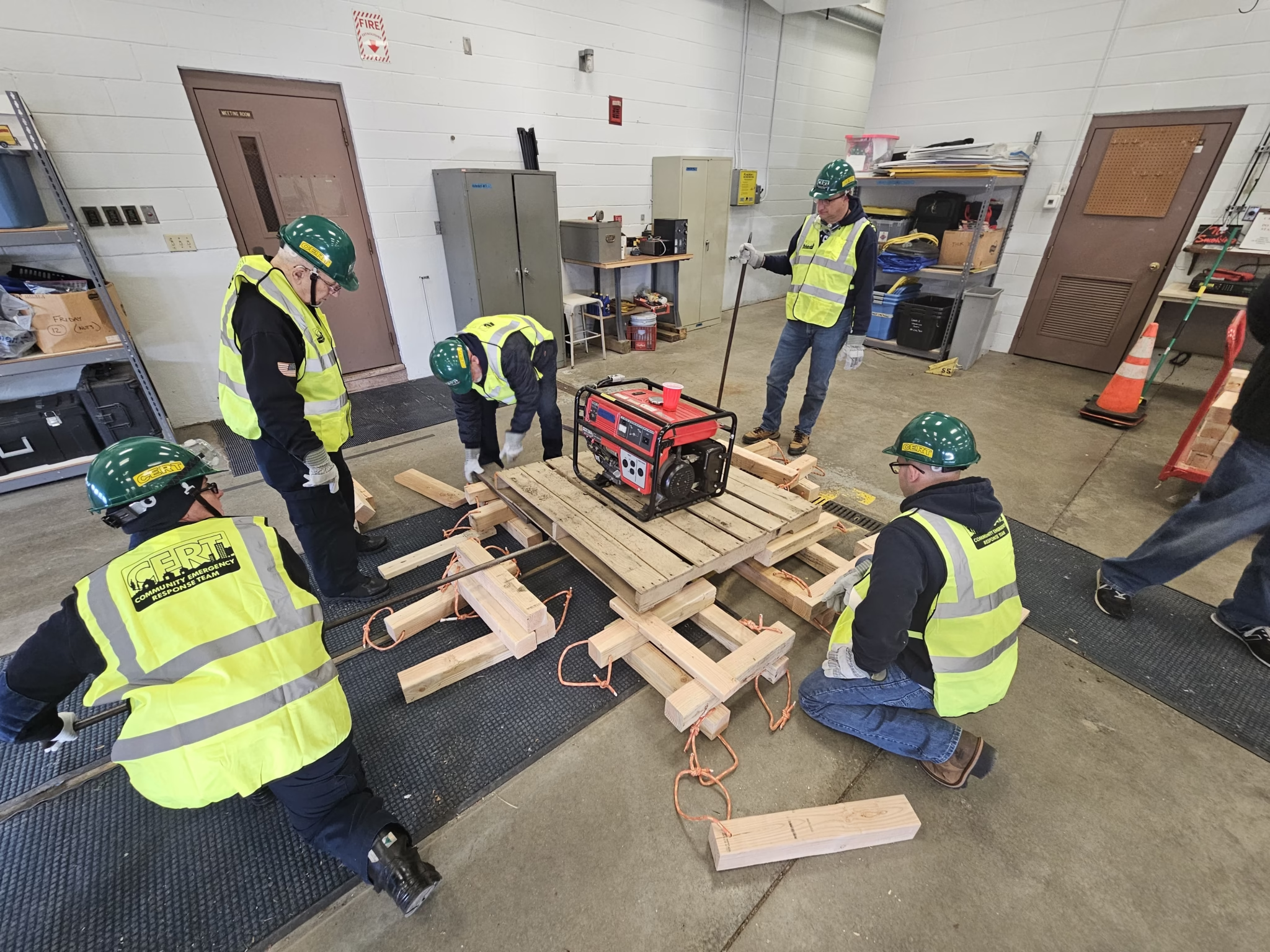
- Mar 6Skills daySaturday, 8 AM to 5 PM · Medical operations, fire safety and utility controls, light search and rescue, with the whole team
- Mar 10Final exam and graduationWednesday · Review, final exam and practical at 6:30 PM, then graduation and the oath at 8 PM
What you’ll learn
CERT Basic Training, section by section
FEMA’s course teaches the skills a team needs in the first hours after a disaster. Open a section to see what it covers.
- Identify roles and responsibilities for community preparedness
- Describe the hazards that affect the community, people, health and infrastructure
- Take personal and organizational preparedness actions
- Describe the functions of CERTs
- Explain the role of CERTs in fire safety
- Identify and reduce potential fire and utility risks
- Conduct a basic size-up for a fire emergency
- Identify hazardous materials
- Put out small fires with a fire extinguisher
- Identify the three killers: airway obstruction, bleeding and shock
- Open airways, control bleeding and treat for shock
- Conduct triage under simulated disaster conditions
- Take sanitation measures that protect public health
- Perform head-to-toe patient assessments
- Establish a treatment area
- Splint suspected fractures and sprains
- Treat burns, wounds and cold-related injuries
- Identify size-up requirements
- Describe the most common search techniques
- Use safe techniques for debris removal and survivor extrication
- Describe ways to protect rescuers
- Describe the CERT structure
- Identify how CERTs work within the Incident Command System
- Explain documentation requirements
- Describe the emotional environment after a disaster, for survivors and rescuers
- Describe steps rescuers can take to relieve their own stress and that of survivors
- Define terrorism and identify potential targets
- Identify the eight signs of terrorism
- Describe CERT procedures and actions after a suspected terrorist incident
Membership requirements
Required for Wallingford members
New members finish these by the end of CERT Basic, before they deploy with the team.
CERT Basic Training
FEMA’s Community Emergency Response Team course, sections 1 to 8 and the final exam.
Haz-Mat First Responder Awareness
Recognizing hazardous materials and staying safe (OSHA 1910.120).
Bloodborne Pathogens
Protecting yourself and others from blood-borne disease (OSHA 1910.1030).
CPR, First Aid and BLS
An American Heart Association course, taught free at OEM in January before the class.
Stop the Bleed
Controlling severe bleeding, taught free at OEM in January before the class.
ICS 100, 200, 700 and 800
Free, self-paced online courses from FEMA. Keep your certificates; you’ll upload them with your application.
Keep learning
Additional training
Members build on CERT Basic with courses like these.
Study corner
Test yourself
Hover over or tap a card to check your answer. The cards come from the CERT glossary, a new set each visit.
Volunteer with us
Ready to train with us?
The next CERT Basic class starts February 3. Apply online to join the winter class.