
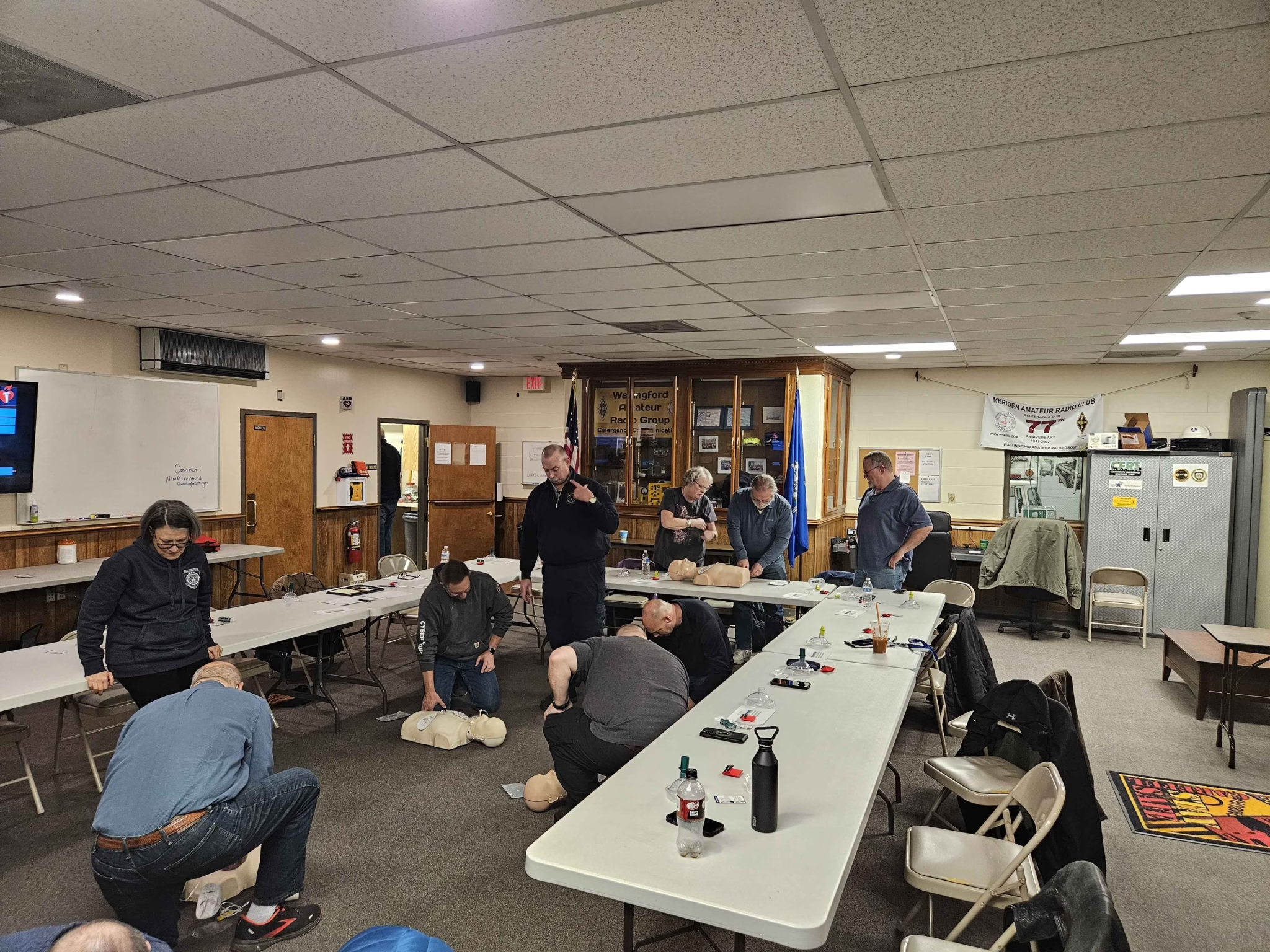
Students kneel to practise CPR during class

Home/CERT Reference Guide/Section 3

Section 3: Disaster Medical Operations, Part 1

Life-threatening conditions and triage.

In this section

  • Identify the three killers: airway obstruction, bleeding and shock
  • Open airways, control bleeding and treat for shock
  • Conduct triage under simulated disaster conditions

26 slides from FEMA's CERT Basic Training. Use the arrows or your keyboard's arrow keys.

PDF 798 KBPowerPoint 1.8 MB

Loading the slides…

Slide 1 of 26Open the PDF

The slides in words

The text of each slide, for reading, searching and screen readers. Select a slide's number to show it above.

  1. Disaster Medical Operations

    — Part 1

  2. CERT Training

    • Treatment for life-threatening conditions
      • Airway obstruction, bleeding, shock
    • Treatment for other, less urgent conditions Provide greatest good for greatest number by conducting simple triage and rapid treatment
  3. START

    • STart = Simple Triage
      • Survivors sorted based on priority of treatment
    • stART = And Rapid Treatment
      • Rapid treatment of injuries assessed and prioritized in first phase
  4. Unit Objectives

    • Identify “killers”
    • Apply techniques for opening airway, controlling bleeding, and treating for shock
    • Conduct triage under simulated disaster conditions
  5. Unit Topics

    • Treating life threatening injuries
    • Triage
  6. Three “Killers”

    • Emergency medicine “killers”
      • Airway obstruction
      • Bleeding
      • Shock
    • First priority of medical operations:
      • Open airway
      • Control excessive bleeding
      • Treat for shock
  7. How to Approach a Survivor

    • Be sure survivor can see you
    • Identify yourself
      • Your name and name of your organization
    • Request permission to treat, if possible
    • Respect cultural differences
  8. Open the Airway

  9. Open vs. Obstructed Airway

  10. Head-Tilt/Chin-Lift Method

  11. Types of Bleeding - 1

    • Arterial bleeding
      • Bleeding from artery spurts
    • Venous bleeding
      • Bleeding from vein flows
    • Capillary bleeding
      • Bleeding from capillaries oozes
  12. Types of Bleeding - 2

  13. Control Bleeding

    • 3 main methods for controlling bleeding:
      • Direct pressure
      • Elevation
      • Pressure points
  14. Pressure Points

  15. Shock

    • Result of ineffective circulation of blood
    • Remaining in shock will lead to death of:
      • Cells
      • Tissues
      • Entire organs
  16. Recognizing Shock

    • Main signs of shock
      • Rapid and shallow breathing
      • Capillary refill of greater than 2 seconds
      • Failure to follow simple commands, such as “Squeeze my hand”
    • Symptoms of shock are easily missed… pay careful attention to your patient!
  17. Responding to Mass Casualty Event

    • Have a plan
    • Follow that plan
    • Document your actions throughout
  18. CERT Sizeup

    • 1. Gather Facts
    • 2. Assess Damage
    • 3. Consider Probabilities
    • 4. Assess Your Situation
    • 5. Establish Priorities
    • 6. Make Decisions
    • 7. Develop Plan of Action
    • 8. Take Action
    • 9. Evaluate Progress REMEMBER: CERT SIZEUP IS A CONTINUAL PROCESS
  19. What Is Triage?

    • Process for managing mass casualty event
    • 1. Survivors are evaluated
    • 2. Survivors are sorted by urgency of treatment needed
    • 3. Survivors are set up for immediate or delayed treatment
  20. Triage

    • Immediate (I): Survivor has lifethreatening injuries (airway, bleeding, or shock)
    • Delayed (D): Injuries do not jeopardize survivor’s life; treatment can be delayed
    • Minor (M): Walking wounded and generally ambulatory
    • Dead (DEAD): No respiration after two attempts to open airway
  21. Rescuer Safety During Triage

    • If hazmat or terrorist event is suspected, CERT members DO NOT respond
      • Evacuate as safely as possible
    • ALWAYS wear PPE:
      • Helmet
      • Goggles
      • N95 mask
      • Work gloves
      • Sturdy shoes or boots
      • Non-latex exam gloves
  22. Triage Process

    • Step 1: Stop, Look, Listen, and Think
    • Step 2: Conduct voice triage
    • Step 3: Start where you stand; follow systematic route
    • Step 4: Evaluate each survivor and tag
    • Step 5: Treat “I” survivors immediately
    • Step 6: Document triage results
  23. Step 4: Triage Evaluation Step 4: Triage Evaluation

    • Check airway and breathing
    • Check circulation and bleeding
    • Check mental status
  24. Triage Pitfalls

    • No team plan, organization, or goal
    • Indecisive leadership
    • Too much focus on one injury
    • Treatment (rather than triage) performed
  25. Unit Summary Unit Summary

    • You should now be able to:
      • Identify 3 “killers”
      • Apply techniques for opening the airway, controlling bleeding, and treating for shock
      • Conduct triage under simulated disaster conditions
  26. Homework Assignment

    • 1. Read unit to be covered in next session
    • 2. Bring necessary supplies for the next session
    • 3. Wear appropriate clothes for the next session

Terms in this section

Each opens in the glossary.

Course material: FEMA's CERT Basic Training (2019), in the public domain. For study only, not medical advice: in an emergency, call 911.