
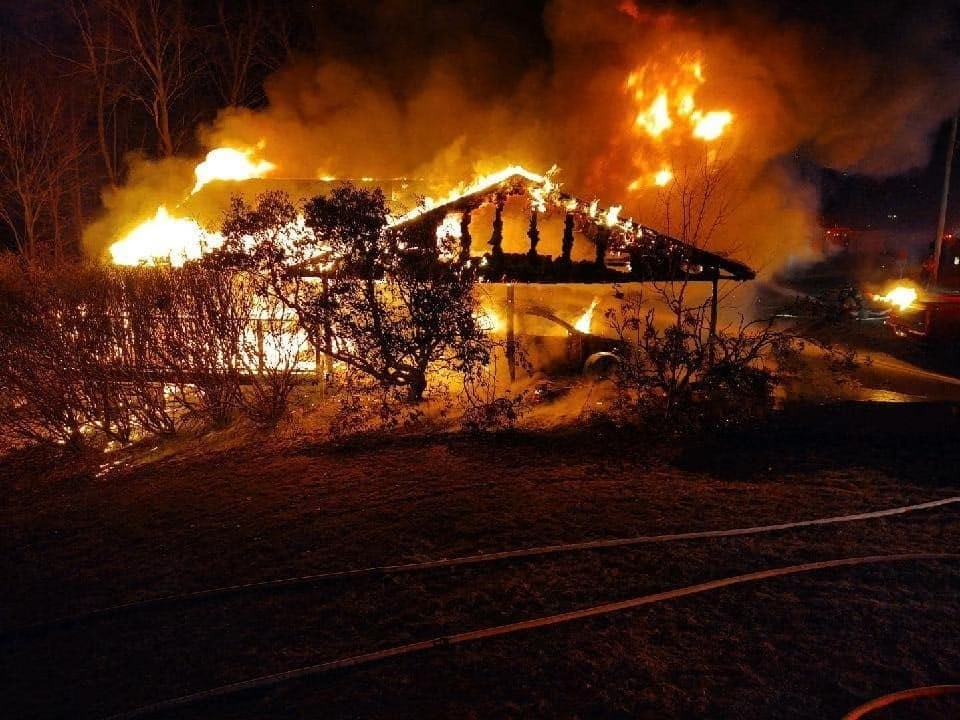
A house fire burning at night

Home/CERT Reference Guide/Section 8

Section 8: Terrorism and CERT

Recognizing threats and what CERT does after an incident.

In this section

  • Define terrorism and identify potential targets
  • Identify the eight signs of terrorism
  • Describe CERT procedures and actions after a suspected terrorist incident

29 slides from FEMA's CERT Basic Training. Use the arrows or your keyboard's arrow keys.

PDF 791 KBPowerPoint 862 KB

Loading the slides…

Slide 1 of 29Open the PDF

The slides in words

The text of each slide, for reading, searching and screen readers. Select a slide's number to show it above.

  1. Terrorism and CERT

  2. Unit Objectives

    • Define terrorism
    • Identify potential targets in the community
    • Identify the eight signs of terrorism
    • Identify CERT operating procedures for a terrorist incident
    • Describe the actions to take following a suspected terrorist incident
  3. Unit Topics

    • What Is Terrorism?
    • Terrorist Targets
    • Terrorist Weapons
    • CBRNE Indicators
    • Preparing at Home, Work, and in Your Neighborhood
    • CERTs and Terrorist Incidents
  4. What Is Terrorism?

    The unlawful use of force or violence against persons or property to intimidate or coerce a government, the civilian population, or any segment thereof, in furtherance of political or social objectives

  5. Terrorism in the Past

  6. Terrorist Goals

    • Mass casualties
    • Loss of critical resources
    • Disruption of vital services
    • Disruption of the economy
    • Heightened fear
  7. Terrorist Targets

    • Seats of government
    • Key industries
    • Bridges, subways, tunnels, and other key transportation facilities
    • Water supplies and utilities
  8. Terrorist Weapons

    • 1. Chemical
    • 2. Biological
    • 3. Radiological
    • 4. Nuclear
    • 5. High-yield Explosives
  9. Chemical Weapons

    • 1. Blister agents
    • 2. Blood agents
    • 3. Choking agents
    • 4. Nerve agents
    • 5. Riot-control agents
  10. Biological Weapons Routes of exposure:

    • Inhalation
    • Ingestion
    • Absorption
  11. Radiological Weapons

    • Considered a higher threat because components are easy to obtain
  12. Nuclear Weapons

    • Derives destructive force from nuclear reaction
    • Affected area is larger as contaminated objects spread
    • Potential for casualties extends beyond initial attack
    • Long-term effects difficult to monitor and track
  13. High-Yield Explosives

    • Weapon of choice for terrorists
      • Used in 80% of attacks
    • Military munitions: grenades, mortars, surface-to-air missiles
    • Newer explosives called improvised explosive devices or IEDs
      • Any device created in an improvised manner used to destroy, disfigure, distract, or harass
  14. Assessing the Risk

    • Types of terrorist weapons in order of greatest risk (least to greatest):
      • Nuclear
      • Chemical
      • Radiological
      • Biological
      • High-yield explosives
  15. Eight Signs of Terrorism

    • 1. Surveillance
    • 2. Elicitation
    • 3. Tests of security
    • 4. Funding
    • 5. Acquiring supplies
    • 6. Impersonation or suspicious people
    • 7. Rehearsals and dry runs
    • 8. Deployment
  16. Attack Has Occurred or Is Underway

    • Vapor clouds or mists
    • Unscheduled spraying
    • Materials or equipment unusual for the area
    • Unusual odors or tastes
    • Out of place and unattended packages
    • Leaking packages
  17. See CBRNE Indicators?

    • If you observe any indications of a terrorist incident you should:
      • Not touch it
      • Move away from object or area
      • Report it to authorities immediately
  18. Physical Signs of Chemical-Biological Attack

    • Sick or dead animals, fish, or birds
    • Large number of persons seeking medical attention
    • Multiple survivors exhibiting similar symptoms
    • Multiple casualties without obvious signs of trauma
  19. Preparing at Home, Work, Neighborhood

    • Personal and family safety is first priority!
    • CERT members are NOT equipped or trained to respond to terrorist incidents
    • Terrorism incident scenes are also crime scenes
  20. Prepare for Terrorist Activity

    • CBRNE events are survivable
    • Preparing for terrorist incidents similar to preparing for natural hazards
    • Review Unit 1 guidelines
    • Certain actions more relevant to CBRNE
  21. Shelter-in-Place Procedures

    • Shut off ventilation systems
    • Go to your shelter-in-place room
    • Use precut plastic sheeting to cover air openings
    • Tape sheeting over doors, windows, vents
    • Use duct tape to seal other areas
    • Listen to a battery-powered radio
    • Ventilate room once contaminants are gone
  22. Protection from Radioactive Fallout

    • Go deep inside a building (distance/shielding)
    • Stay inside (time)
    • Stay tuned
  23. Basic Decontamination Procedures

    • Leave the contaminated area
    • Take decontamination action
      • Remove everything
      • Wash hands
      • Flush the entire body
      • Blot dry
    • Report for decontamination
    • Food safety
  24. Treating Others

    • First priority for a CERT member is personal safety
      • Take self-protective measures only
      • Do not attempt to treat survivors in contaminated area
      • Tell survivors about decontamination procedures
  25. What Professional Responders Will Do

    • Follow sizeup steps:
      • What is going on
      • How bad the situation is and how much worse it could get
      • What measures can be taken to control the incident safely
      • What resources will be needed
  26. Unit Summary

    • Terrorists attack to:
      • Intimidate the government or the civilian population
      • Further their objectives
    • Their goals are to:
      • Create mass casualties
      • Disrupt critical resources, vital services, and the economy
      • Cause fear
  27. Unit Summary (cont’d) Terrorist Weapons

    • 1. Chemical
    • 2. Biological
    • 3. Radiological
    • 4. Nuclear
    • 5. High-yield Explosives
  28. Unit Summary (cont’d) CERT Protocol for Terrorist Incidents

    • Terrorist incidents are a stop sign!
    • Do not proceed if you suspect terrorist activity
    • Simple guidelines:
      • Do not touch
      • Move away from object or area
      • Report it to authorities immediately
  29. Homework Assignment

    • Review the materials from the previous units
    • Wear appropriate clothing for disaster simulation exercise

Terms in this section

Each opens in the glossary.

Course material: FEMA's CERT Basic Training (2019), in the public domain. For study only, not medical advice: in an emergency, call 911.